AI Bubble Fears and K-Shaped Economy Weigh on Investors
Markets face mounting concerns over AI valuations, uneven economic recovery, and surging hyperscaler capital expenditures heading into the holiday weekend.

Investors heading into the holiday weekend found themselves navigating a confluence of anxieties that have defined much of this market cycle: the sustainability of artificial intelligence valuations, the persistence of an uneven economic recovery, and the staggering scale of capital spending by the world's largest cloud and technology companies.
The so-called K-shaped economy — in which higher-income households and large corporations continue to thrive while lower-income Americans remain under pressure — shows little sign of resolving. This divergence complicates the Federal Reserve's policy calculus and muddies the traditional signals that investors rely on to gauge consumer health. When the top of the curve accelerates and the bottom stagnates, aggregate data can mask significant underlying stress.
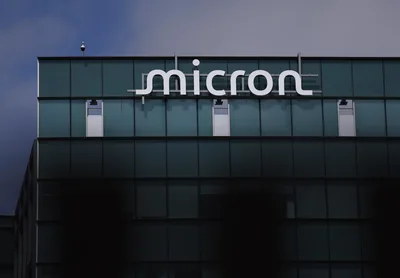
Read more Micron Stock Slides Toward Worst Monthly Loss in Over a Decade →
Meanwhile, concerns about an AI-driven asset bubble are gaining mainstream traction. The central question is whether the enormous bets being placed on artificial intelligence infrastructure will generate returns commensurate with their cost — or whether the cycle will follow the familiar arc of transformative-technology manias that outpaced near-term monetization. Hyperscaler capital expenditure, the billions being poured into data centers, custom silicon, and energy capacity by companies like Microsoft, Alphabet, Amazon, and Meta, sits at the heart of this debate.
The scale of that spending is, by most historical measures, extraordinary. Bulls argue it reflects rational competition for a generational platform shift. Bears contend it represents a coordination problem — each major player afraid to blink first — that could result in massive overcapacity if AI adoption curves disappoint. The analytical tension between those two views is unlikely to resolve quickly, making it a defining theme for markets well beyond any single holiday weekend.
Continue reading at Yahoo.