Bitcoin Slides as Inflation Data Fails to Lift Crypto Markets
Bitcoin retreated after U.S. inflation figures disappointed bulls, while spot ETFs recorded their first back-to-back outflows of August.
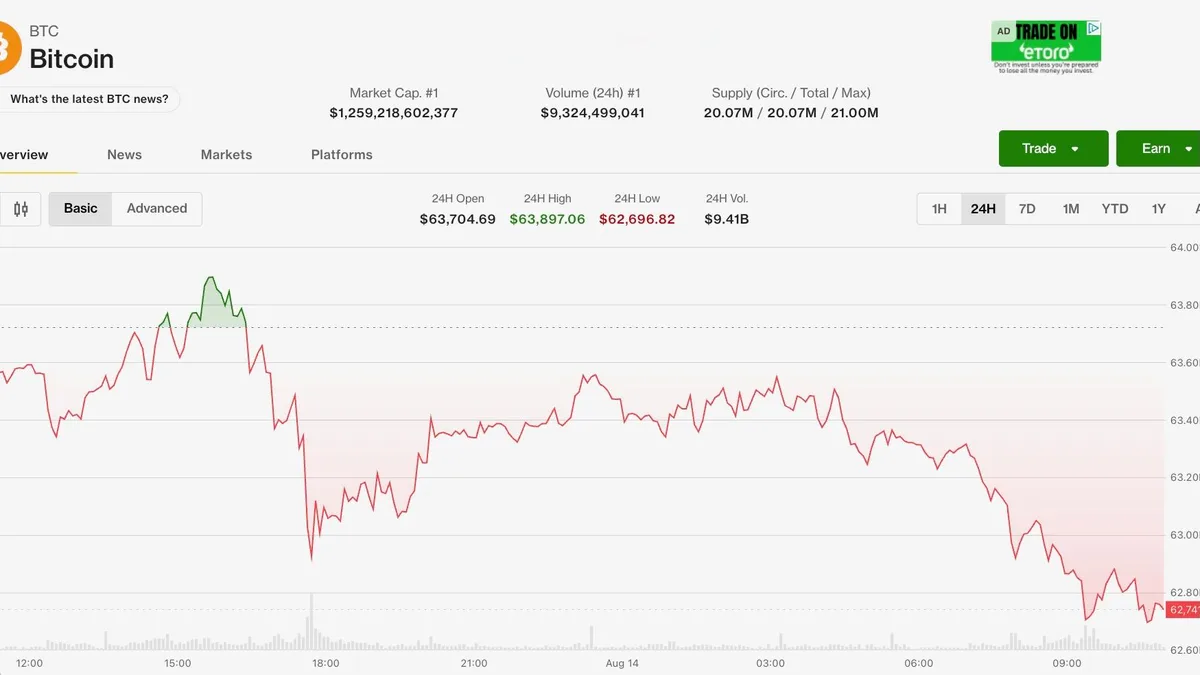
Bitcoin edged lower after the latest U.S. inflation reading failed to deliver the catalyst that crypto traders had been anticipating. In past cycles, softer price data has fueled risk-asset rallies on the logic that it clears the path for Federal Reserve rate cuts — but this time, markets responded with a shrug, leaving Bitcoin unable to sustain momentum above key technical levels.
The more telling signal may have come from the spot Bitcoin ETF complex, which logged its first consecutive days of net outflows during August. That two-day drawdown, while not catastrophic in scale, matters because institutional ETF flows have functioned as a real-time sentiment gauge since the products launched earlier this year. Sustained outflows suggest that professional and retail investors channeling money through regulated wrappers are, at least briefly, pulling back rather than buying the dip.
Read more Dell Stock Surges Past Micron and AMD With Fourfold Gain in 2024 →
The divergence between macro data and crypto price action is worth examining carefully. Inflation figures that once reliably moved digital assets now seem to carry diminishing signal value, possibly because the market has already priced in a gradual Fed easing path. When the expected catalyst arrives and prices don't rally, it often indicates that positioning was already stretched — or that some other headwind is absorbing the would-be upside.
For longer-term observers, a single bout of ETF outflows and a modest price slip do not constitute a trend reversal. But they do serve as a reminder that the post-ETF-approval narrative of unstoppable institutional inflows is not a one-way street. Demand can ebb, and macro tailwinds that appear obvious in theory can dissipate quickly when the broader risk environment is uncertain. Traders and investors alike will be watching whether the ETF outflow streak extends into a third day — a development that could shift sentiment more meaningfully.
Continue reading at CoinDesk.