China's Dual PMI System Explained: NBS vs. RatingDog
Two monthly China PMI readings routinely tell different stories. Here's why the divergence is by design, not error.
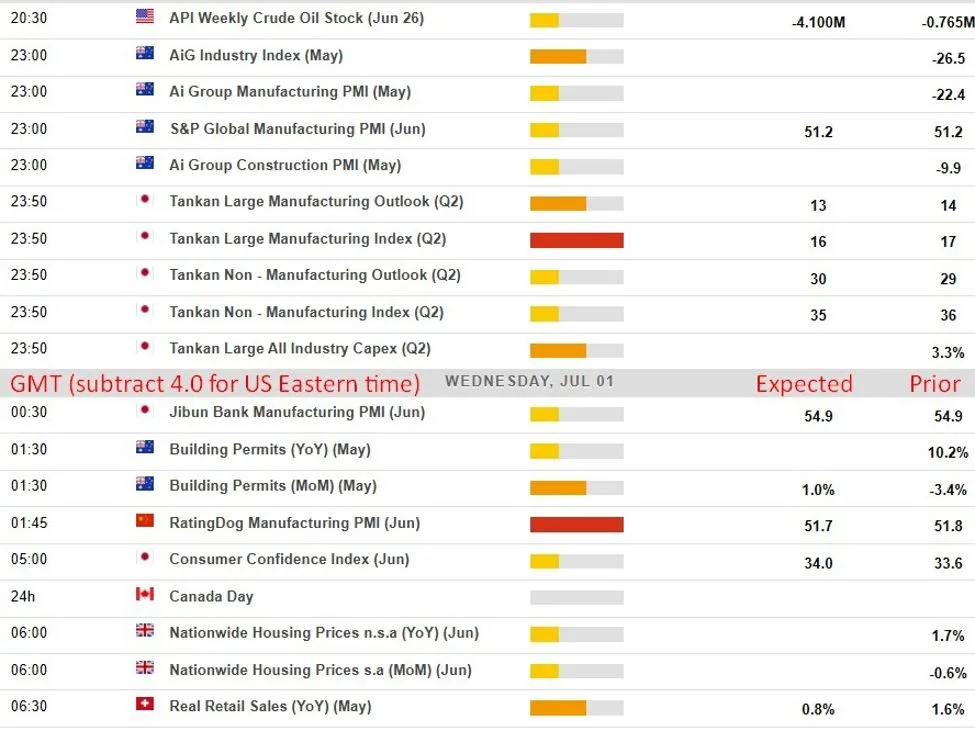
China releases two distinct sets of manufacturing PMI figures every month, and for investors who follow them closely, the numbers rarely tell the same story. Tuesday's official NBS factory PMI came in at 50.3, beating forecasts on the back of AI-linked export strength — yet analysts at ING flagged that domestic demand remains notably weak beneath that headline number. Wednesday brings the privately compiled counterpart, now branded the RatingDog China PMI after a sponsorship change that took effect with the August 2025 release.
The official gauge, produced by China's National Bureau of Statistics, surveys roughly 3,000 firms weighted heavily toward large state-owned enterprises. Because those businesses tend to be cushioned by policy support and infrastructure spending, the NBS reading is characteristically steadier and reflects the parts of the economy most directly shaped by Beijing's interventions. It covers manufacturing, services, and construction, making it the broader of the two instruments.
Read more Tangled Fiber-Optic Cables Reveal War's Toll on Ukraine's Infrastructure →
The RatingDog index — compiled throughout by S&P Global, with only the naming rights changing hands to a Shenzhen-based credit-research firm — draws on a smaller panel of around 500 companies skewed toward private-sector, export-oriented, and technology-linked SMEs. That composition makes it inherently more volatile: smaller firms feel demand shifts, supply-chain disruptions, and currency moves in real time, without the buffer of state backing. Its services reading also explicitly excludes retail, a further structural difference traders should keep in mind.
The practical takeaway is that the two surveys are measuring related but meaningfully different cross-sections of China's economy. When they diverge sharply, the gap is informative rather than contradictory — NBS signaling how policy-directed industry is faring, RatingDog revealing how market-facing private firms are actually experiencing conditions on the ground. In a period when Beijing is actively supporting strategic sectors while domestic consumer demand sputters, that distinction carries real analytical weight.
Continue reading at Forexlive.