Ford Turns to Veteran Engineers After AI Falls Short on Quality Control
Ford hired 350 experienced engineers after AI tools proved inadequate for diagnosing complex manufacturing quality issues.
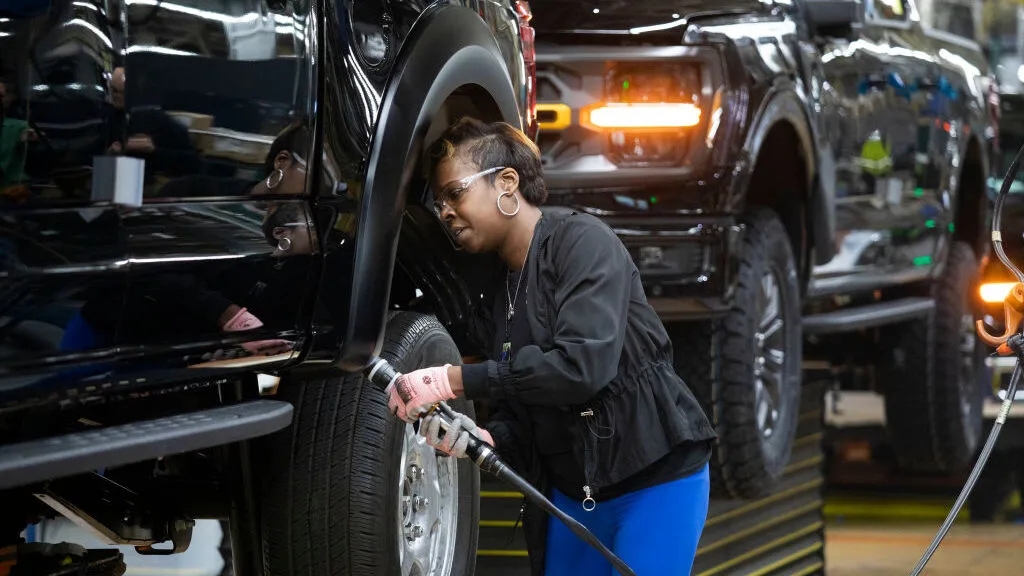
Ford Motor Company has taken a notable step back from automation-first thinking, bringing on roughly 350 veteran engineers to address persistent quality control problems that its artificial intelligence systems were unable to resolve on their own. The move signals a growing recognition inside one of America's largest automakers that machine learning tools, however sophisticated, still struggle with the nuanced, experience-driven judgment that seasoned human engineers provide on the factory floor.
The decision reflects a broader tension playing out across the manufacturing sector: companies have invested heavily in AI-driven diagnostics and predictive maintenance platforms, only to discover that real-world production defects often require contextual reasoning that current models cannot reliably replicate. For Ford, which has faced significant warranty costs and quality complaints in recent years, the stakes of getting this calculus wrong are measurable in billions of dollars and customer loyalty.
Read more Apple's Price Hike Sends Consumers the AI Infrastructure Tab →
By deliberately re-centering human expertise in its quality assurance pipeline, Ford is effectively treating experienced engineers as a strategic asset rather than a legacy cost — a framing that runs counter to the automation narrative that has dominated corporate boardrooms for much of the past decade. The 350 hires represent not a rejection of AI, but rather an acknowledgment that the technology works best as a complement to human judgment, not a substitute for it.
The episode offers a cautionary data point for industries racing to replace specialized knowledge workers with algorithmic systems. Quality control in automotive manufacturing involves variables that are difficult to fully encode — supplier inconsistencies, subtle assembly deviations, and failure modes that emerge only after thousands of units have been produced. Veterans who have spent careers diagnosing such problems carry institutional knowledge that remains, for now, stubbornly hard to digitize.
Ford's recalibration may well influence how other legacy manufacturers think about the pace and scope of AI adoption on the production line. Continue reading at Yahoo Finance.