Guggenheim Sees ServiceNow and Salesforce as Buys Amid AI Fears
A Guggenheim analyst argues that selloff-driven valuations for both software giants have overshot reality, even as AI competition remains a genuine concern.
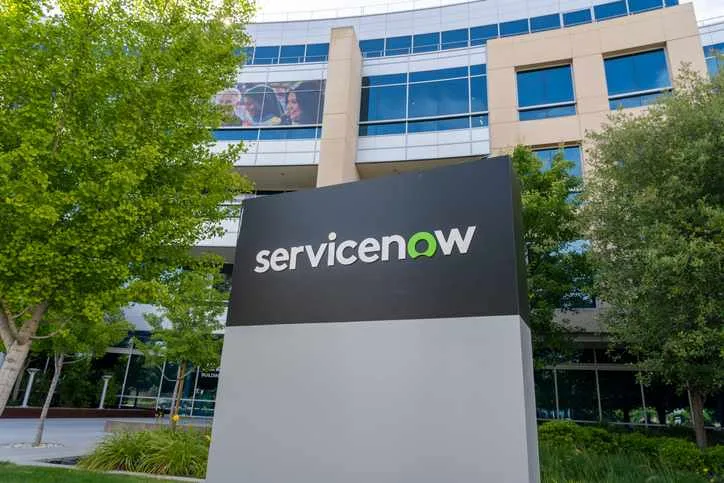
Wall Street's anxiety over artificial intelligence disrupting enterprise software has pushed valuations for ServiceNow and Salesforce into territory that at least one prominent analyst considers excessively pessimistic. A Guggenheim analyst now rates both stocks as buys, contending that the market has priced in an "Armageddon" scenario that is unlikely to materialize in the near term.
The core tension here is familiar to anyone watching the software sector: large-cap SaaS incumbents face a credible long-term threat from AI-native competitors that can replicate workflow automation and CRM functionality at a fraction of legacy costs. Yet the leap from "real threat" to "existential collapse" is analytically significant, and Guggenheim is drawing that line explicitly. Depressed multiples, in the analyst's view, have already absorbed more damage than the fundamental outlook warrants.
Read more Micron Stock Slides Toward Worst Monthly Loss in Over a Decade →
Both ServiceNow and Salesforce occupy deeply entrenched positions inside enterprise IT stacks — the kind of sticky, contractually bound relationships that don't unwind quickly even when superior alternatives emerge. That switching-cost moat has historically served as a buffer against disruption cycles, giving incumbents time to adapt, acquire, or integrate competing technologies. The analyst's bullish call leans on precisely that structural durability.
For investors, the call reflects a broader debate playing out across the software sector: whether AI is a headwind that erodes pricing power and net revenue retention, or a tailwind that expands addressable markets for platforms already embedded in enterprise workflows. Guggenheim's position suggests the latter narrative has been underweighted in recent price action, creating an entry point for patient capital willing to look past near-term uncertainty.
The divergence between sentiment and fundamentals rarely persists indefinitely, and when institutional conviction begins to shift on names this widely held, the re-rating can be swift. Whether this call proves prescient will depend heavily on how both companies execute their own AI integration strategies in coming quarters. Continue reading at MarketWatch.com