Hormuz Strait Threat Level Hits 'Severe' After Iran Tanker Attacks
Iran is targeting ships that bypass its approved northern route, raising the Strait of Hormuz threat to its highest level.
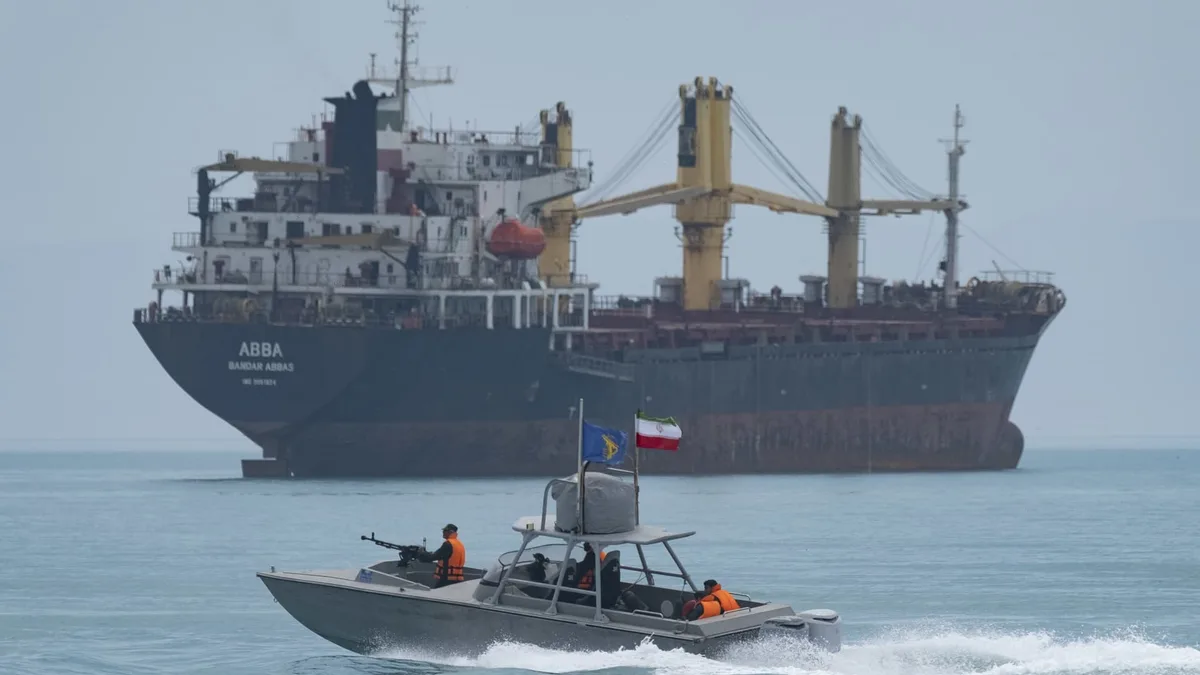
The Strait of Hormuz, through which roughly a fifth of the world's oil supply passes, has become a flashpoint once again after Iran's military escalated its campaign against commercial shipping. The threat level in the critical waterway has been raised to 'severe' following Iranian attacks on tankers that were using routes aligned with U.S. Navy guidance — a direct collision of competing maritime authority claims in one of the planet's most strategically sensitive chokepoints.
Tehran has issued an explicit warning: vessels that do not follow a northern transit corridor sanctioned by Iran risk becoming targets. The posture represents a significant hardening of Iran's stance, effectively demanding that commercial shipping operators choose between complying with Iranian directives or facing the threat of military action — a choice that puts ship owners, insurers, and energy markets in an extraordinarily difficult position.
Read more Micron Stock Slides Toward Worst Monthly Loss in Over a Decade →
The practical implications extend well beyond the Persian Gulf. Any sustained disruption to Hormuz traffic carries the potential to tighten global oil supplies almost immediately, given the volume of crude and liquefied natural gas that transits the strait daily. Energy traders and risk analysts will be watching closely to assess whether this represents a sustained Iranian strategy or a pressure tactic tied to broader geopolitical negotiations.
What makes this moment particularly consequential is the layered tension between Iranian maritime claims and U.S. Navy-guided routing. When tankers following American naval guidance become targets, the episode reframes the strait not merely as a commercial risk zone but as an active theater of great-power competition. The severity designation signals that the international shipping community can no longer treat Hormuz as a manageable background risk — it has moved to the foreground.
Continue reading at CNBC.