Marvell, Broadcom, Nvidia: Who Wins the AI Interconnect Race?
Marvell's premium valuation hinges on AI interconnect growth, but can it keep pace with Broadcom and Nvidia?
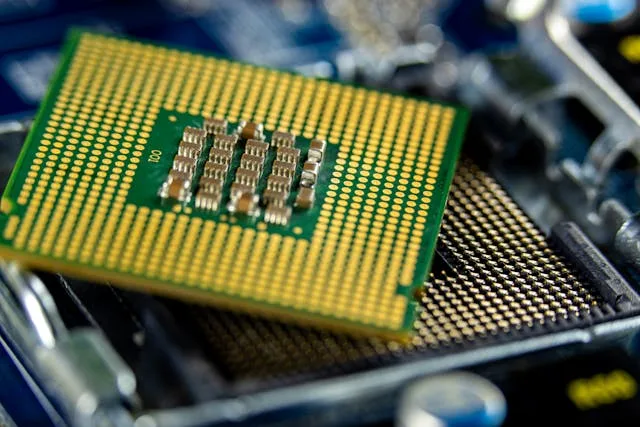
The battle for dominance in AI infrastructure is no longer fought solely at the chip level — increasingly, it is being waged across the connective tissue that links processors, memory, and data centers together. Marvell Technology has positioned itself as a key player in this AI interconnect segment, but its elevated valuation raises a pointed question: can the company's earnings trajectory actually justify what investors are already pricing in?
Broadcom and Nvidia cast long shadows in this space. Nvidia's end-to-end dominance — from GPUs to networking hardware acquired through Mellanox — gives it a structural advantage that is difficult to replicate. Broadcom, meanwhile, has cultivated deep relationships with hyperscaler customers building custom AI accelerators, generating a reliable and growing revenue stream that provides its own form of competitive insulation. Marvell sits in a different position, competing on the strength of its custom silicon and optical interconnect capabilities rather than platform ubiquity.
Read more Why Upstart Stock Dropped Sharply in July 2024 →
The core tension for Marvell investors is one familiar to anyone tracking high-growth technology names: premium valuations demand premium execution, consistently and without interruption. Any shortfall in AI-related revenue — whether from delayed customer ramp-ups, intensifying competition, or macro-driven capital expenditure pullbacks among cloud giants — could compress multiples quickly. The market has already baked in an optimistic scenario, leaving little margin for error.
What distinguishes Marvell's opportunity is the structural tailwind powering the entire interconnect category. As AI model complexity grows and data centers scale to accommodate larger training workloads, the demand for high-bandwidth, low-latency connectivity solutions is expected to expand significantly. Marvell's technology portfolio is designed to address precisely that need — but so are the portfolios of well-capitalized rivals with deeper customer entrenchment and broader product ecosystems.
The outcome of this three-way comparison may ultimately hinge less on technology quality and more on customer concentration risk, gross margin resilience, and the pace at which custom ASIC designs move from design wins to volume production. For investors weighing exposure to AI infrastructure, Marvell represents a higher-risk, higher-potential-reward proposition relative to Broadcom's steadier compounding profile or Nvidia's entrenched platform dominance. Continue reading at Yahoo Finance.