The Chemistry Behind Fireworks Colors: Why Blue Is So Hard
Fireworks dazzle with reds and whites, but producing a true blue remains one of pyrotechnics' toughest chemical challenges.
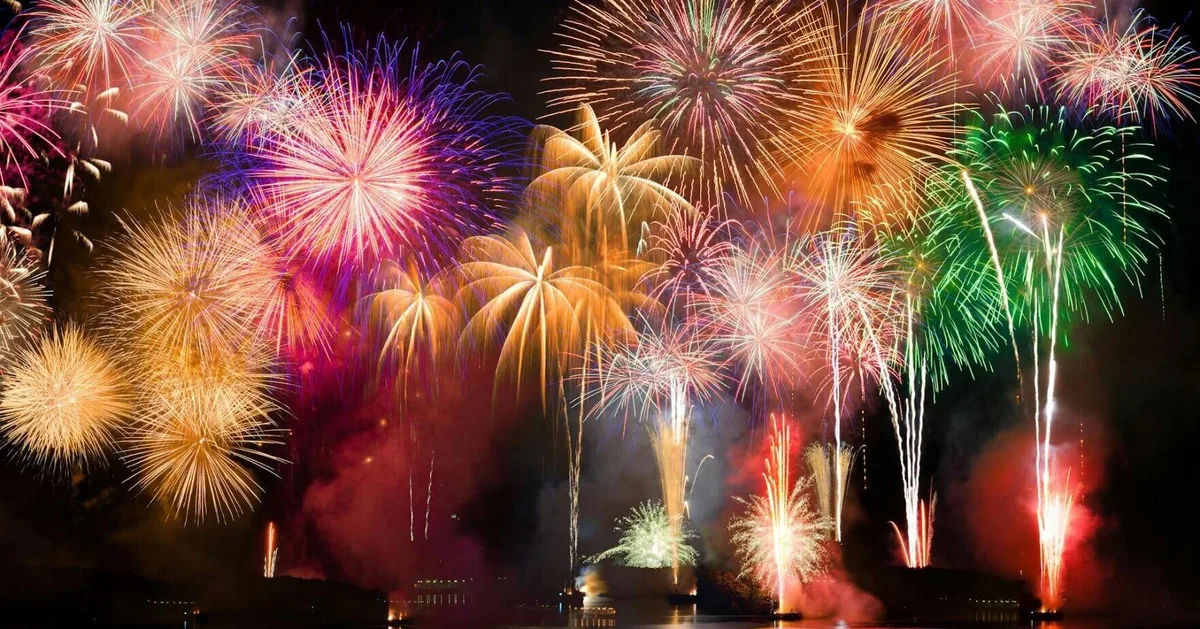
Every Fourth of July, Americans crane their necks skyward expecting a full spectrum of color — but the science of fireworks means that spectrum has always had a conspicuous gap. Reds, whites, and greens come relatively easily to pyrotechnicians, while a vivid, stable blue remains stubbornly difficult to produce. The reasons are rooted in the same atomic physics that governs light itself.
Fireworks get their colors from metal salts packed into the shell alongside the explosive charge. When those salts are heated to extreme temperatures, electrons in the metal atoms absorb energy, jump to higher energy states, and then release that energy as light when they fall back down. Each element emits light at specific wavelengths: strontium compounds produce reds, barium yields greens, and sodium delivers the familiar brilliant yellow-orange. The color you see is a direct readout of atomic structure.
Read more Aura Minerals to Bring Mining Fleet In-House at Three Brazil Gold Mines →
Blue is the problem child of the palette. Copper compounds are the conventional source of blue in fireworks, but copper's light-emitting chemistry is highly sensitive to temperature — the very heat needed to ignite and propel a shell tends to destroy the copper molecules before they can radiate cleanly. The result is often a muddy, washed-out blue rather than the crisp cerulean audiences expect. Achieving a hotter, brighter burn without degrading the copper chemistry is a trade-off that pyrotechnicians have wrestled with for generations.
The difficulty of blue is more than a curiosity — it reflects a broader truth about applied chemistry: nature does not arrange its atomic transitions for human aesthetic convenience. Researchers have explored alternative copper formulations and even rare-earth compounds in pursuit of a more reliable blue, but no silver bullet has emerged at the scale and cost required for commercial fireworks. For now, the night sky on Independence Day remains, in a chemically meaningful sense, more red, white, and green than it is blue.
Continue reading at conwaydailysun