VeriSign Stock Jumps 5.6% on Raised Guidance and Buyback Boost
VeriSign lifted full-year 2026 guidance and expanded its buyback to $1.5B, but its .com dependency remains a structural risk investors shouldn't ignore.
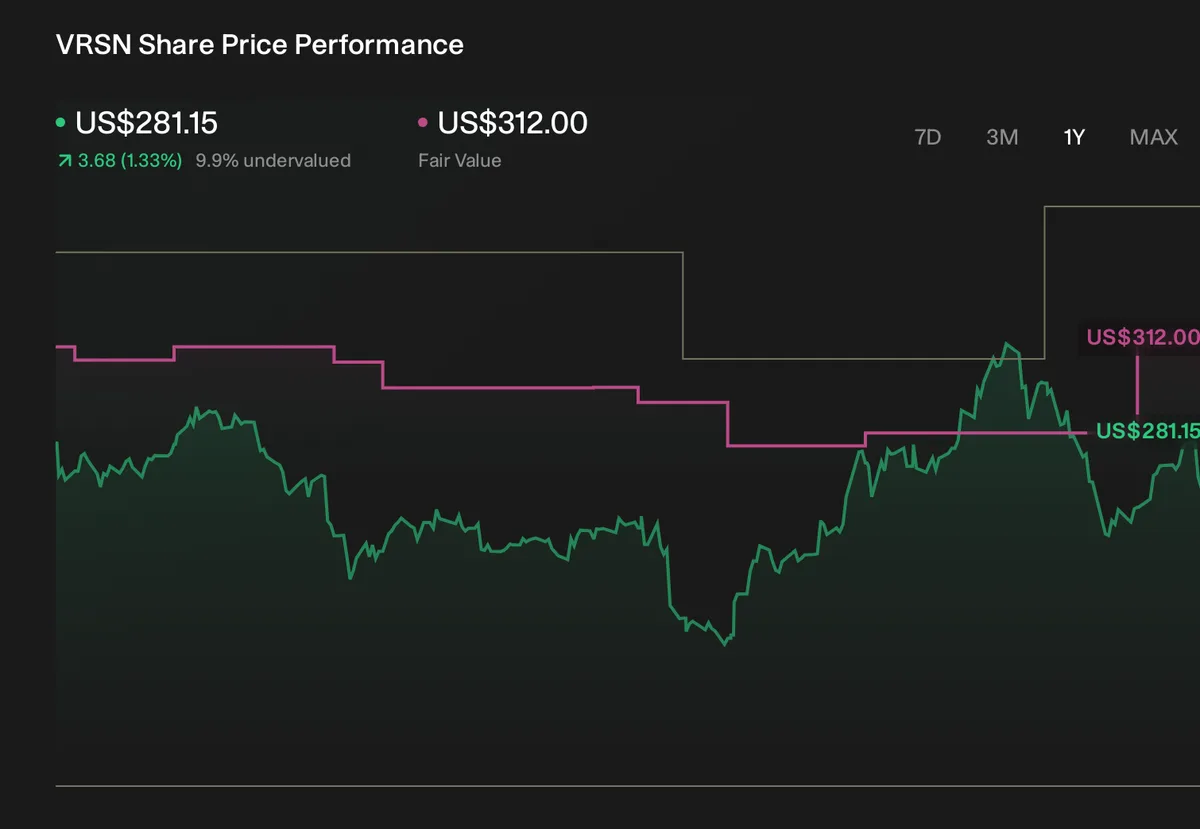
VeriSign's shares climbed 5.6% after the domain registry giant delivered strong second-quarter and first-half 2026 results, then raised its full-year revenue and operating income guidance — a combination that signals management's conviction that the business is performing ahead of earlier expectations. For a company whose fortunes are tightly bound to the health of the internet's address infrastructure, that kind of forward-looking confidence carries real weight with institutional investors.
The capital return announcements amplified the market's enthusiasm. Management expanded its share repurchase authorization to $1.50 billion and declared a dividend, moves that together communicate a belief in durable, predictable cash generation. Buyback expansions of this scale are typically reserved for moments when leadership sees few more productive uses of excess cash — or when they believe shares remain attractively priced relative to intrinsic value.
Read more Micron Stock Slides Toward Worst Monthly Loss in Over a Decade →
Yet the rally deserves some analytical scrutiny. VeriSign's business model is narrower than its market cap might imply. The company's revenue engine runs almost entirely on .com and .net domain registrations, two top-level domains that are mature, heavily penetrated, and susceptible to shifts in how individuals and businesses establish an online presence. Emerging technologies, alternative naming systems, or changes in how regulators treat VeriSign's exclusive registry agreements could each create headwinds that better-than-expected quarterly results cannot fully offset.
The raised guidance narrative works — for now. Investors willing to own VeriSign are effectively betting that the centrality of .com to global commerce remains durable for years to come, and that the company's contractual position as the authoritative registry gives it pricing leverage that few peers can match. Those are reasonable bets with a track record behind them, but they are concentration bets nonetheless, and the latest guidance upgrade does not substantially change that underlying equation.
Continue reading at Simply Wall St