Wall Street Turns to AI as the Fed Goes Quieter
Investment firms are deploying AI tools to decode Federal Reserve signals as the central bank pulls back on public communication.
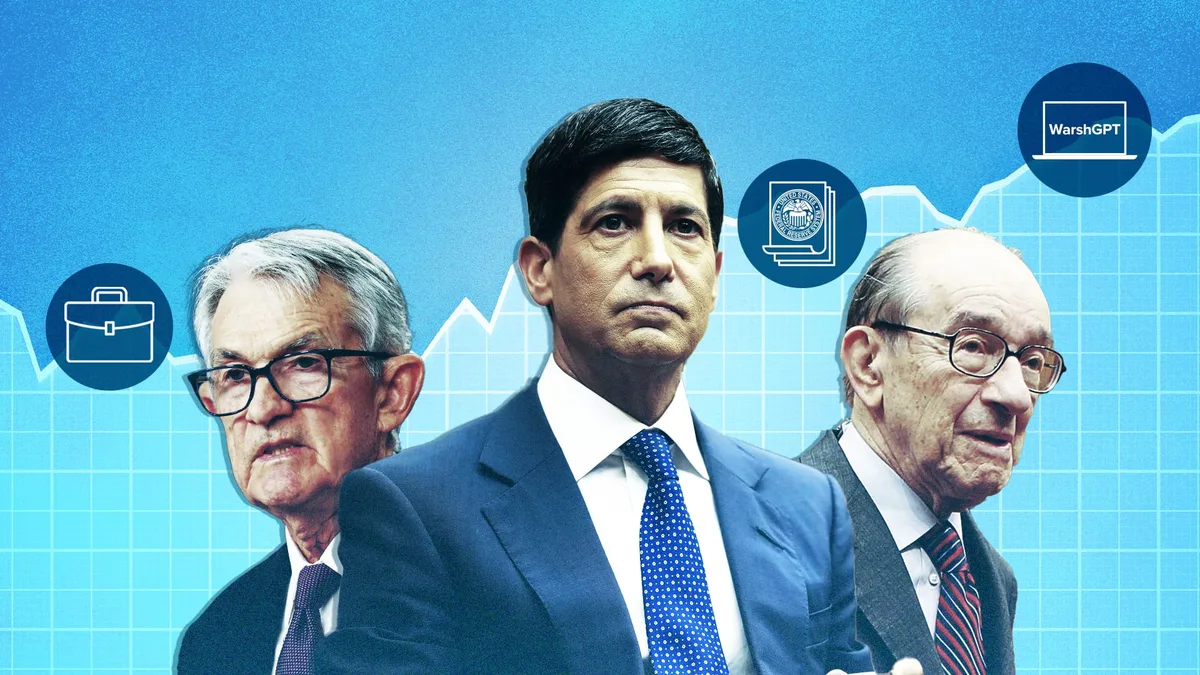
For decades, Wall Street traders and analysts have treated Federal Reserve commentary as a primary market signal — parsing every speech, press conference, and policy statement for clues about the direction of interest rates. Now, as the Fed appears to be entering a period of reduced public engagement, financial firms are scrambling to find new ways to stay ahead of monetary policy shifts.
The response from the investment community has been revealing: some firms are turning to artificial intelligence tools — internally dubbed with names like "WarshGPT" — to fill the interpretive void left by fewer official communications. The nickname is a nod to the kind of Fed-watching that has long required deep institutional knowledge and pattern recognition, now being automated and scaled through large language models and other AI systems.
Read more Micron Stock Slides Toward Worst Monthly Loss in Over a Decade →
This shift carries meaningful implications for how markets price risk and react to uncertainty. When central bankers speak frequently, they effectively manage expectations in real time, smoothing volatility by giving investors a steady stream of forward guidance. A quieter Fed, by contrast, forces market participants to work harder to infer policy intent from economic data alone — a task that AI is increasingly being enlisted to help with.
The trend underscores a broader transformation in financial services, where the competitive edge is no longer just about who has the best economists or the most seasoned Fed-watchers, but about who can build or access the most sophisticated analytical tools. AI systems trained on historical Fed communications, economic releases, and market reactions could offer firms a structural advantage in a lower-signal environment.
What remains uncertain is whether AI-generated Fed interpretation will prove accurate enough to justify the reliance — or whether it will amplify mispricing when models encounter communications regimes they were not trained to anticipate. Continue reading at US Top News and Analysis.