Why the Persian Gulf Holds the World's Greatest Oil Reserves
The Persian Gulf region dominates global energy supplies for reasons rooted in ancient geology. Here's what makes it uniquely resource-rich.
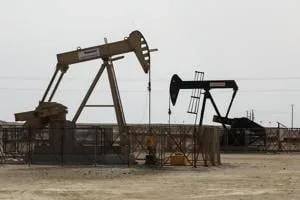
Few questions in energy geopolitics carry more practical weight than why a single region of the Middle East sits atop so much of the world's oil and natural gas. The Persian Gulf states — Saudi Arabia, Iraq, Kuwait, Iran, and the UAE among them — collectively hold a disproportionate share of proven hydrocarbon reserves, a reality that has shaped diplomacy, conflict, and global markets for more than a century.
The explanation is fundamentally geological rather than political. Hundreds of millions of years ago, the region that is now the Persian Gulf was covered by shallow, warm seas teeming with marine organisms. As those organisms died and accumulated on the seafloor, they were buried under layers of sediment. Over vast spans of time, heat and pressure transformed that organic material into crude oil and natural gas — a process geologists call catagenesis. The Gulf region experienced this process under nearly ideal conditions, with the right combination of source rocks, reservoir rocks, and impermeable cap rocks that trapped the hydrocarbons in place.
Read more Princeton Review Ranks Colleges by Return on Investment in 2024 →
Equally important is the structural geology of the Arabian Plate. Tectonic forces folded and faulted the subsurface in ways that created enormous natural traps — dome-shaped anticlines and other formations — where oil and gas could accumulate in massive concentrations rather than dispersing. This geometry helps explain why individual fields in the region, like Saudi Arabia's Ghawar, are so extraordinarily large by global standards. Nowhere else on Earth did so many favorable geological variables align so consistently across such a wide area.
The implications extend well beyond energy markets. Because extraction costs in the Gulf tend to be low relative to other producing regions — shallow reservoirs, high natural pressure, and decades of developed infrastructure all contribute — the region retains enormous economic leverage even as renewable energy expands globally. Any serious analysis of the energy transition must reckon with the fact that Gulf producers can remain competitive at price points that would render many alternative sources uneconomical.
Understanding the deep-time origins of Gulf oil is not merely an academic exercise. It reframes the resource as the product of a singular, unrepeatable planetary coincidence rather than a permanent entitlement — one that took hundreds of millions of years to form and is being consumed in a geological instant. Continue reading at laconiadailysun.