Trump and Thune's Uneasy Alliance Ahead of Mount Rushmore Event
Despite a shared public appearance at Mount Rushmore, the relationship between Trump and Senate Majority Leader Thune remains notably strained.
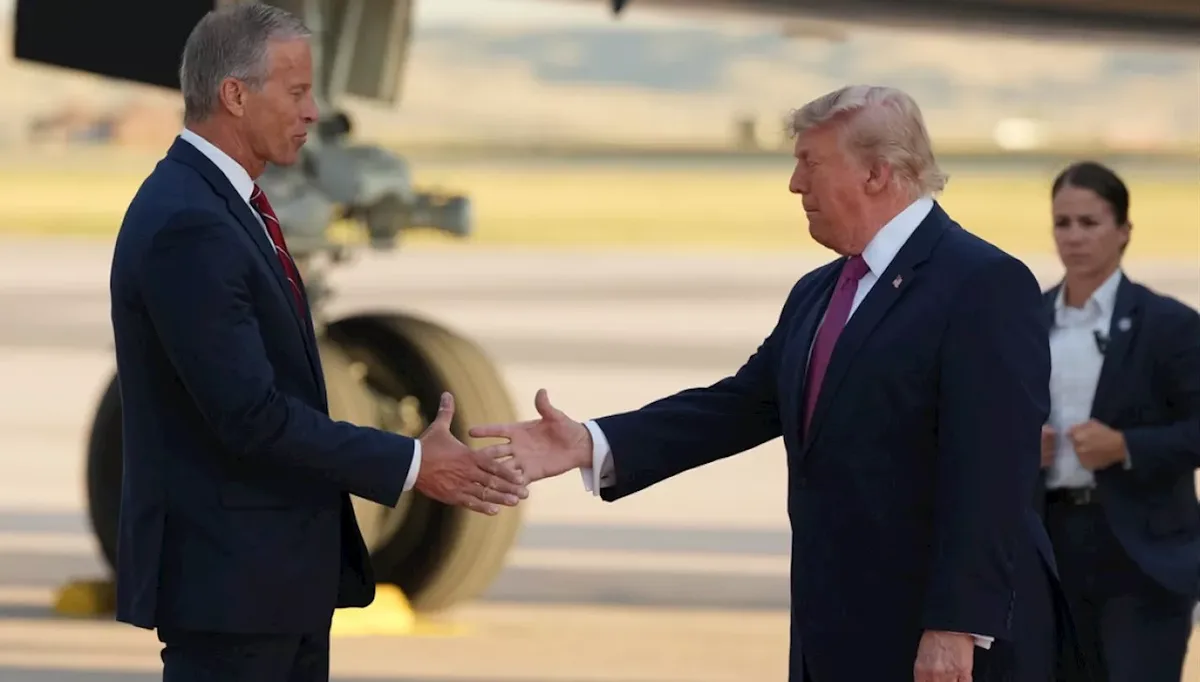
The political partnership between President Donald Trump and Senate Majority Leader John Thune has long been marked by underlying tension, and an upcoming celebration at Mount Rushmore is unlikely to paper over the friction that has defined their dynamic. While the two men are set to share a high-profile platform, observers of Capitol Hill politics note that the appearance of unity can mask significant disagreements over strategy, temperament, and legislative priorities.
Thune, a South Dakota Republican who ascended to the Senate's top leadership role, was not Trump's preferred choice for majority leader — a fact that has never fully faded from the backdrop of their interactions. Trump's open skepticism of Thune during the leadership contest signaled to many that any working relationship between the two would require careful navigation on both sides, with Thune needing to balance institutional independence against the demands of a president who prizes loyalty above most other virtues.
Read more Iran Holds Strait of Hormuz Talks With Saudi Arabia and Oman →
The Mount Rushmore event, located in Thune's home state, presents a politically complex moment. For Thune, hosting the president on South Dakota soil offers a chance to demonstrate relevance and regional clout. For Trump, it is another opportunity to command a dramatic backdrop — the monument itself a canvas for the kind of grand nationalist imagery he has long favored. Yet stagecraft alone rarely resolves the substantive disagreements that simmer beneath such occasions.
What makes this relationship worth watching is less the personal drama and more what it reveals about the broader challenge of governing with a slim Senate majority. Thune must hold together a Republican caucus with competing factions while managing a president who is not shy about publicly pressuring members of his own party. That structural tension — between Senate institutionalism and executive-branch dominance — is likely to define the legislative calendar in ways that no ceremonial event can obscure.
Continue reading at headtopics (dcexaminer).