Vance: Economic Pressure Is Key to U.S. Strategy on Iran
JD Vance says sustained economic pressure has put Iran on the defensive, framing it as Washington's most effective lever.
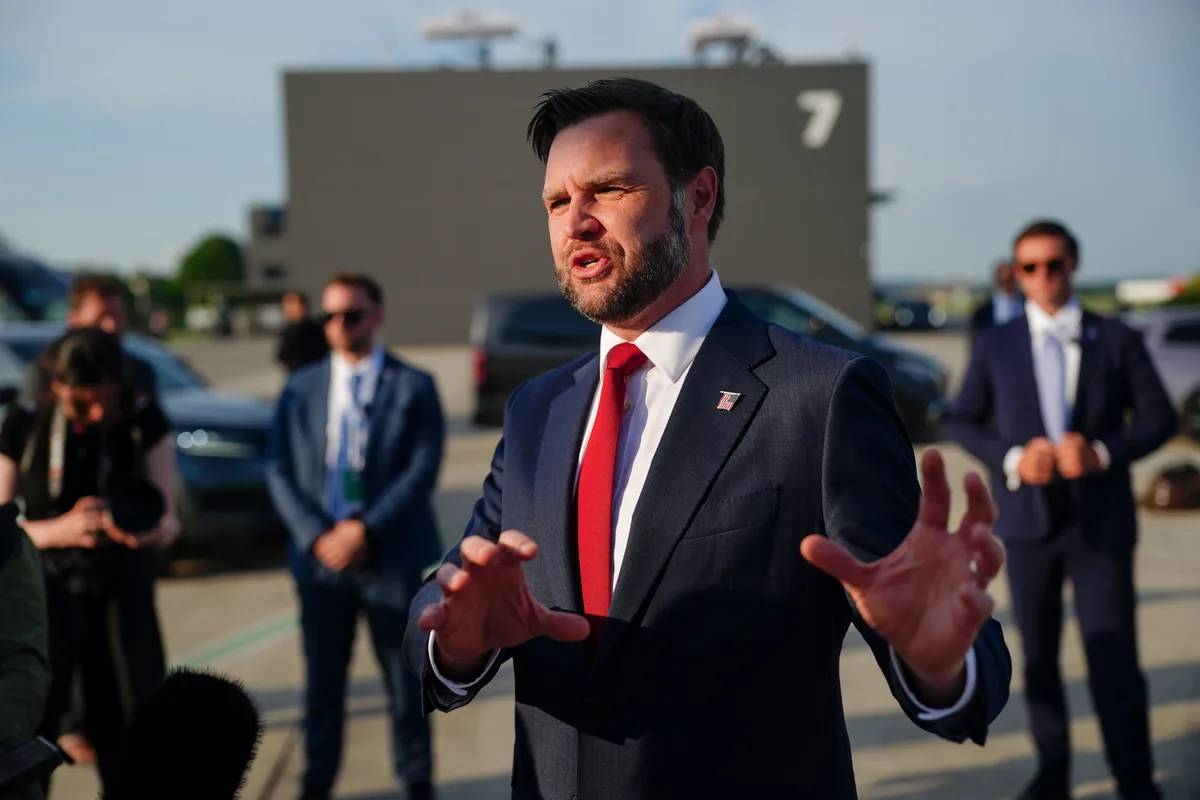
Vice President JD Vance has described the administration's approach to Iran as a carefully calibrated balancing act, suggesting that economic coercion — rather than military confrontation — remains the preferred instrument for advancing American objectives in the region. His remarks signal a deliberate prioritization of financial leverage over escalatory options, at least for now.
Vance acknowledged that Iran has been feeling the weight of that strategy acutely in recent weeks, noting that the pressure exerted on Tehran has been substantially greater than what Washington itself has absorbed in return. That asymmetry, in his framing, is precisely the point: imposing costs on an adversary while limiting blowback at home.
Read more Bessent's Treasury Moves Undercut Fed Chair Warsh's Rate Authority →
The phrase "delicate dance" is telling. It suggests the administration is threading a narrow path between appearing weak enough to keep diplomacy alive and appearing strong enough to deter further Iranian provocation. Economic sanctions and financial isolation have historically been Washington's tool of choice against Iran, and Vance's comments indicate that playbook remains firmly in place under the current administration.
What remains less clear is whether economic pressure alone can deliver the specific policy outcomes Washington is seeking — whether that means curbing Iran's nuclear program, limiting its regional influence, or both. Analysts have long debated the effectiveness of sanctions as a stand-alone strategy, and Vance's remarks, while confident in tone, do not specify what concessions or behavioral changes the administration ultimately expects to extract.
Continue reading at US Top News and Analysis.