Why Iran's Hormuz Threat Now Rivals Its Nuclear Card
Tehran is increasingly treating the Strait of Hormuz as its most potent leverage, potentially eclipsing decades of nuclear brinkmanship.
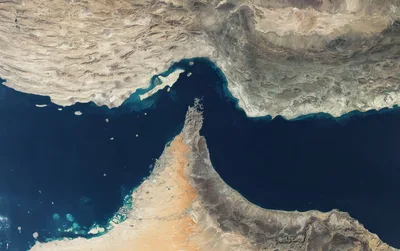
For decades, Iran's nuclear program has served as the centerpiece of its geopolitical bargaining strategy — a slow-burning threat that kept Western capitals perpetually anxious and sanctions regimes perpetually justified. But a significant shift in strategic emphasis appears to be underway in Tehran, with the Strait of Hormuz emerging as what some analysts now call Iran's 'golden weapon': a chokepoint so economically vital that the mere credible threat of closing it carries enormous coercive weight.
The Strait of Hormuz is no ordinary waterway. Roughly 20 percent of the world's traded oil passes through its narrow passage, making it one of the most consequential geographic bottlenecks in the global economy. Unlike nuclear capability — which requires years of technical development, invites crippling international sanctions, and risks military preemption — the ability to threaten or partially disrupt Hormuz is something Iran already possesses and can exercise with relatively low escalation costs, at least in the short term.
Read more Iran Holds Strait of Hormuz Talks With Saudi Arabia and Oman →
This recalibration reflects a broader logic of asymmetric statecraft. Iran recognizes that nuclear negotiations, however dramatic, produce diminishing returns when sanctions relief remains conditional and trust between parties is structurally thin. Hormuz, by contrast, is an immediate, tangible lever. A credible closure threat sends oil prices surging globally within hours, pressuring not just the United States but also Asian economies — particularly China and India — that depend heavily on Gulf crude. That geographic spread of pain gives Iran diplomatic leverage that nuclear threats, largely a U.S.-Israel concern, cannot replicate.
The strategic pivot also signals something about Iran's internal calculus. Prioritizing Hormuz over nuclear advancement may suggest that Tehran is more interested in economic relief and regional influence than in achieving weapons capability per se — or that leadership sees the strait as a faster path to the negotiating table on better terms. Either interpretation has profound implications for how the West structures its next round of engagement with Tehran.
Continue reading at Reuters