Asia's Hydrogen Bet: Building an Economy, Not Just a Rail Line
Asian nations are investing in hydrogen transportation, but analysts say the real prize is laying the groundwork for a broader green hydrogen economy.
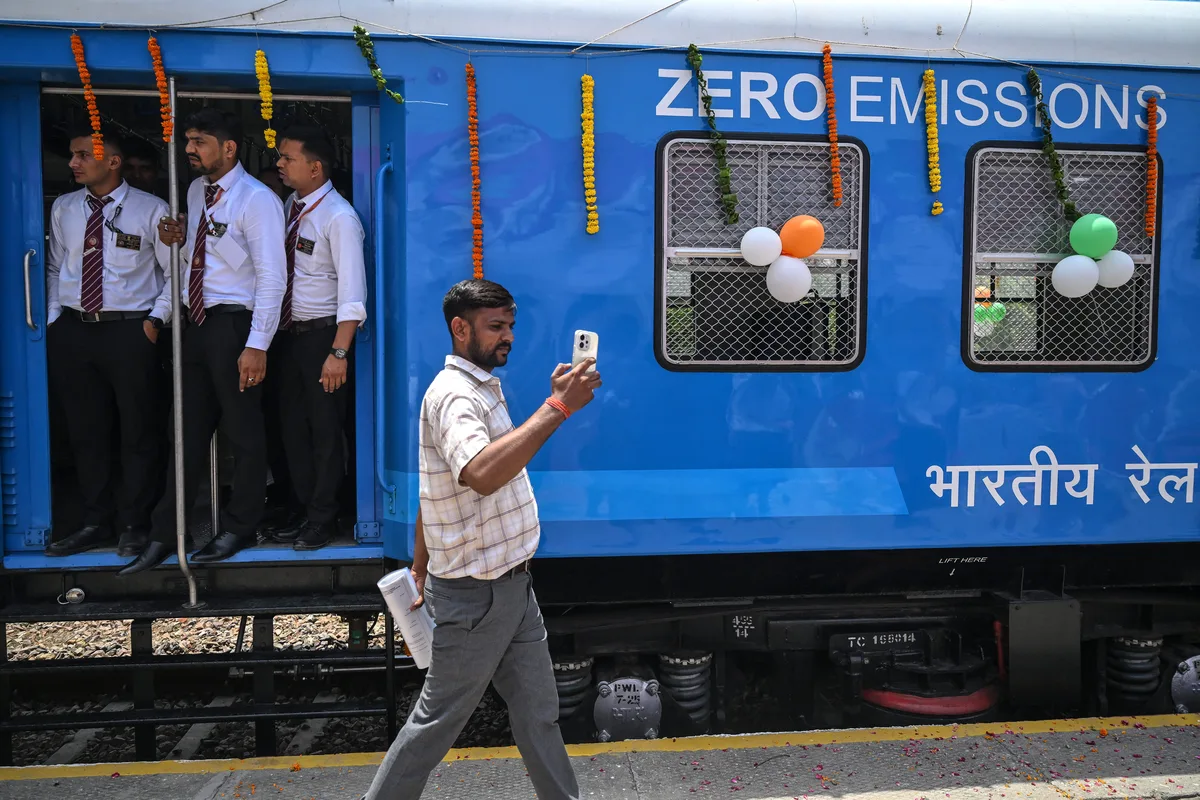
Across Asia, governments and state-linked enterprises are channeling investment into hydrogen-powered transportation, with railways emerging as a visible flagship for what proponents describe as a transformative energy pivot. But observers who look past the headline projects see a more strategic calculation at work: trains and buses are proving grounds, not endpoints, for hydrogen infrastructure that could eventually reshape how entire economies produce and consume clean energy.
The logic is straightforward. Hydrogen vehicles require fueling stations, storage networks, and reliable production capacity — precisely the industrial scaffolding that a hydrogen economy needs to function at scale. By mandating or subsidizing hydrogen rail pilots, Asian policymakers are effectively compelling private industry to build out that infrastructure now, before market forces alone would justify the cost. It is industrial policy dressed in green clothing, and the region has a long track record of making that approach work.
Read more Japan Exports Rise for Fifth Month on AI-Driven Chip Demand →
The stakes are considerable. Asia accounts for a disproportionate share of global carbon emissions, and transportation is among the hardest sectors to decarbonize with battery technology alone, particularly for heavy freight and longer routes. Hydrogen, which emits only water when consumed in a fuel cell, offers a theoretical path around the energy-density limitations that constrain battery-electric alternatives — though production costs and efficiency losses remain significant challenges that no pilot program has yet fully resolved.
What distinguishes Asia's push from earlier green-technology waves is the breadth of government commitment across multiple jurisdictions simultaneously. When Japan, South Korea, and China all signal hydrogen ambitions within overlapping timeframes, the collective demand signal becomes large enough to attract the kind of capital that can actually move an emerging technology down the cost curve. The hydrogen train, in that sense, is less a solution to a transit problem and more a political instrument for accelerating an energy transition with consequences far beyond the railway platform.
Continue reading at US Top News and Analysis.