Can the Lawyer Who Beat Big Tobacco Take Down Meta?
Mike Moore, who helped force a historic tobacco settlement, is now targeting social media giants with a similar legal strategy.
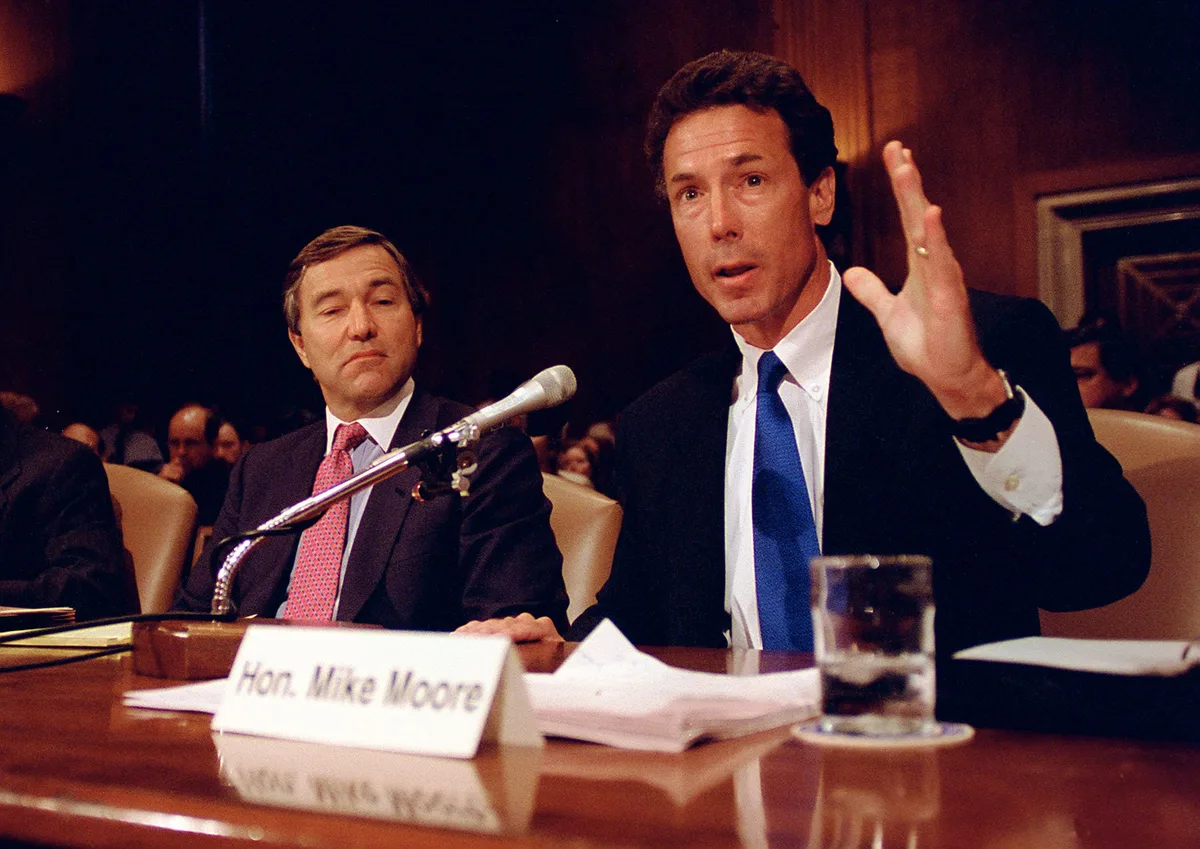
Mike Moore made history by engineering one of the most consequential legal settlements in American corporate history, forcing the tobacco industry to pay hundreds of billions of dollars and fundamentally alter how it marketed cigarettes. Now he is training that same strategic firepower on a new target: Meta and the broader social media industry. The question animating legal circles and public health advocates alike is whether a playbook designed in the 1990s can work against a 21st-century technology giant.
The tobacco litigation succeeded because Moore and his coalition of state attorneys general reframed the argument — shifting from individual consumer responsibility to industry-wide, systemic harm. Tobacco companies, they argued, knowingly addicted users and concealed the health consequences. Critics of social media platforms are making a structurally similar case: that companies like Meta designed algorithms with full awareness of their addictive potential and documented harms, particularly to younger users, while publicly minimizing those risks.
Read more Circuit Split on Prediction Markets Heads Toward Supreme Court →
The analogy has real force, but also real limits. Tobacco produced a physically addictive substance with a direct, measurable causal chain to disease. Social media's harms — depression, anxiety, disordered eating, and developmental disruption among adolescents — are real and increasingly well-documented, but the causal linkages remain more contested in courts and in science. Defense lawyers for the platforms will almost certainly exploit that ambiguity aggressively.
What gives the current wave of litigation momentum is the accumulation of internal documents — echoing the famed tobacco industry papers — suggesting platforms were aware of harm and chose engagement over user welfare. If plaintiffs can establish that executives knowingly suppressed or ignored evidence of harm to minors, the moral and legal calculus shifts considerably. State attorneys general are again central to the effort, replicating the coalition structure that proved decisive against cigarette makers.
Whether courts ultimately hold Meta and its peers to the same standard of accountability that collapsed Big Tobacco's legal defenses remains genuinely uncertain. But the architecture of the argument — systemic harm, concealed knowledge, vulnerable populations — is deliberately and purposefully familiar. Continue reading at US Top News and Analysis.