Trump's MMR Split Push Lacks Scientific Basis, Experts Warn
Experts say breaking up the MMR vaccine has no scientific grounding and faces serious practical obstacles.
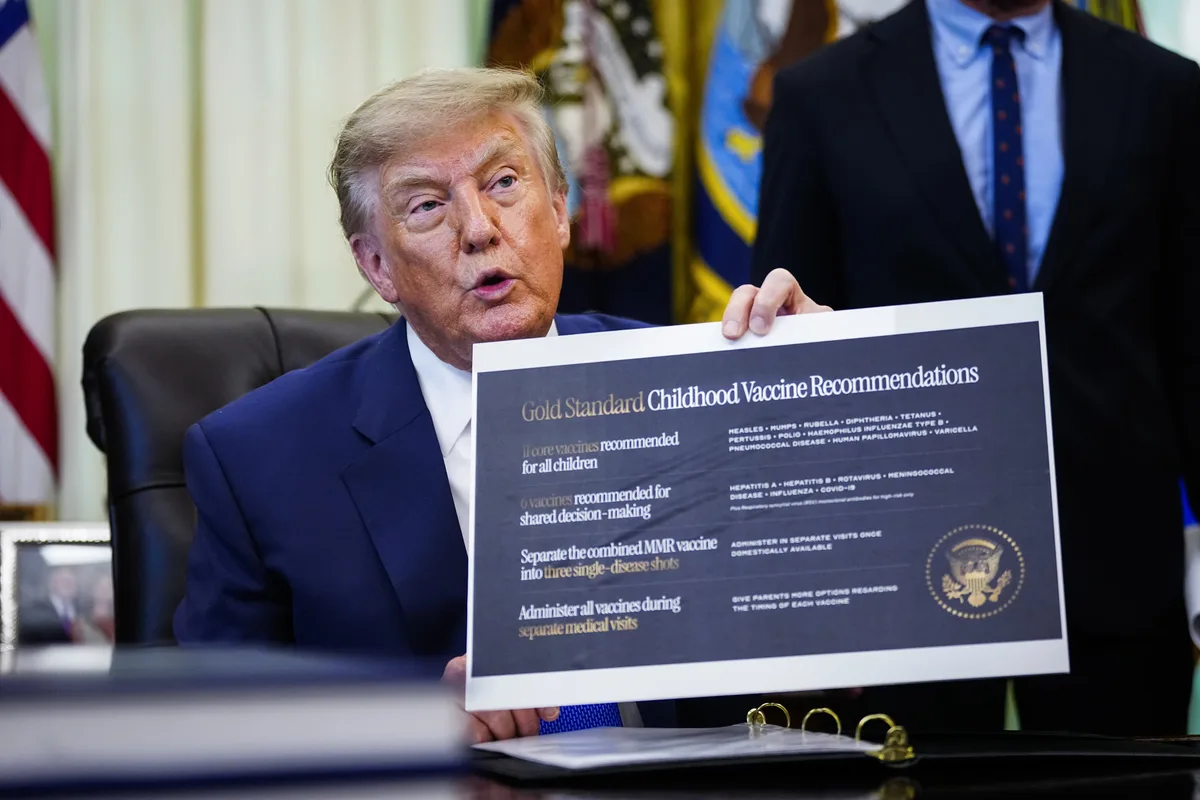
The Trump administration's push to separate the combined measles, mumps, and rubella vaccine into individual shots has drawn swift and pointed pushback from physicians and public health specialists. The core objection is straightforward: there is no credible scientific rationale for dismantling a vaccine formulation that has been used safely and effectively for decades.
The MMR vaccine is one of the most studied immunizations in modern medicine, with a long track record of safety and efficacy. Experts warn that splitting it apart would not simply be a logistical reshuffling — it would introduce real consequences for patients, health systems, and ultimately for disease control. Requiring separate injections means additional clinic visits, greater opportunity for incomplete immunization, and a measurable risk that children fall through the cracks before receiving full protection against all three diseases.
Read more Pakistan Reports Progress in US-Iran Talks Amid Reparation Standoff →
The practical obstacles are equally daunting. Manufacturers would need to produce, test, and distribute individual formulations at scale — a process that takes years and significant regulatory work. Meanwhile, any gap in vaccine uptake, even a temporary one, could prove consequential in a country already managing measles outbreaks at levels not seen in years.
Critics of the proposal see it as scientifically unfounded interference in public health infrastructure, driven by political considerations rather than medical evidence. The concern is not merely theoretical: hesitancy and confusion tend to rise when established vaccine schedules are altered without clear justification, and health officials note that trust, once eroded, is difficult to rebuild.
The episode underscores a broader tension between the administration's skepticism toward longstanding public health consensus and the medical establishment's insistence on evidence-based policy. Continue reading at US Top News and Analysis.