Trump's 20% Growth Claim: What History Actually Shows
President Trump says U.S. GDP could surge 20%, but such growth has occurred only once since World War II.
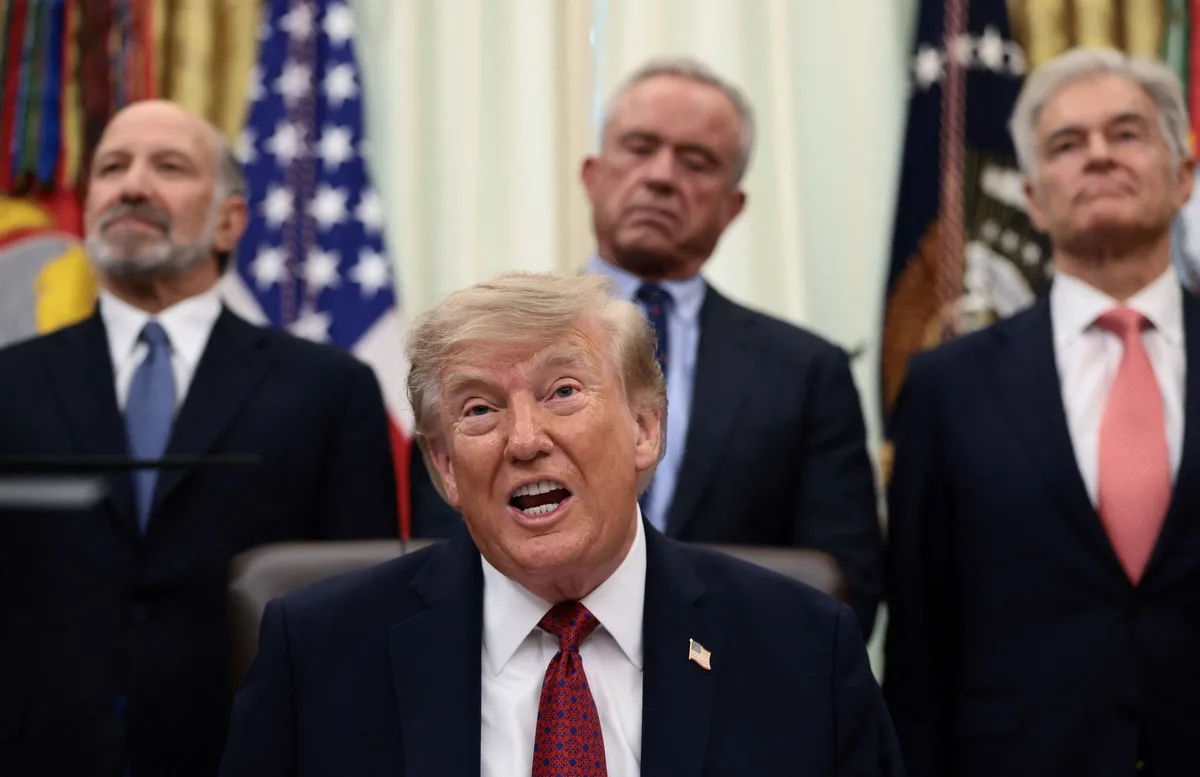
President Trump has made a striking economic claim: that the United States could achieve growth rates as high as 20%. It is an assertion that strains against more than seven decades of postwar economic history, during which that threshold has been reached only a single time — a benchmark that underscores just how exceptional, and how unlikely, such a figure would be under modern conditions.
The rarity of that milestone matters for understanding the claim's credibility. Post-WWII American economic expansions, even the most robust ones, have rarely cracked double-digit annual growth. The structural realities of a $28 trillion economy — its sheer size, the complexity of its labor and capital markets, and the drag of existing debt — make the kind of explosive output gains associated with smaller or recovering economies virtually impossible to replicate domestically at scale.
Read more Bank of England Governor Flags AI Cyber Risk to Global Finance →
What makes the statement politically consequential is the accompanying argument Trump attached to it: that even rapid growth of that magnitude should not prompt the Federal Reserve to raise interest rates. That framing puts the president in direct tension with orthodox monetary policy. The Fed currently targets 2% inflation, and with inflation still running above that level, central bank officials have signaled a data-dependent approach to rate decisions — one that traditionally treats overheating growth as a reason to tighten, not hold steady.
The collision between White House growth optimism and Fed independence is not new, but Trump's framing sharpens the stakes. Arguing that extraordinary growth should coexist with low rates is, in effect, asking the central bank to abandon one of its core mandates — price stability — in favor of an expansionary posture the data do not yet support. Analysts watching this dynamic will note that presidential pressure on the Fed rarely bends the institution's hand, but it does create uncertainty that financial markets must price in.
For everyday Americans, the practical question is simpler: what would 20% growth even mean, and why hasn't it happened? The answer lies in the difference between recovery-era surges — like the postwar boom that produced the one modern exception — and the steady-state growth of a mature economy. Expectations set far above historical norms can distort policy debates and investor behavior long before they are tested against reality. Continue reading at US Top News and Analysis.